
The grid is a privilege. When you are forty miles from the nearest outlet, a portable power station is not a gadget. It is infrastructure. And the infrastructure you choose determines whether your trip is a weekend or a two-week off-grid stay.
I have run four different power stations at camp in the past year: the Goal Zero Yeti 1000S, the Jackery Explorer 1000, the Goal Zero Yeti 300, and the Bluetti EB3A. I tested them in the same conditions: a campsite in the desert, no grid, solar only. The setup was a small fridge (one cubic foot, runs about sixty watts continuously), an LED lantern (five watts), a phone charger (ten watts), and a laptop (forty-five watts on a full charge cycle). Total draw: about one hundred and fifteen watts, or roughly two point five kilowatt-hours per day.
The Goal Zero Yeti 1000S is the premium pick. One thousand and fifty-six watt-hours of storage, one thousand two hundred watts of continuous output. The math is straightforward: a full charge runs the fridge for two days, the laptop for eleven hours, and the lantern for three weeks. You can recharge it from a six hundred watt solar panel in about three and a half hours of full sun, which means a week off-grid is realistic if you have the panels and the sun. The ports are comprehensive: USB-C PD, standard USB-A, AC, and twelve volt DC. The built-in LED light is useful for the camp at night. The catch: it is twenty-three pounds, which is a lot to carry from the car to the campsite. And at one thousand four hundred ninety-nine dollars, it is the most expensive unit on this list.
The Jackery Explorer 1000 is the value pick. One thousand and two watt-hours for eight hundred ninety-nine dollars. That is a six-hundred-dollar savings over the Goal Zero for essentially the same storage capacity. The output is one thousand watts, which is less than the Goal Zero but enough for most camping needs. The recharge time from solar is about three and a half hours, which is the same as the Goal Zero. The catch: the plastic casing feels less premium, and the number of ports is lower. You get fewer USB-C ports and no built-in light. But for the price, the performance-per-dollar is the best on this list.
The Goal Zero Yeti 300 is the portable option. Eleven point two pounds, two hundred eighty-eight watt-hours. It is small enough to carry in a backpack, which means it is the only unit on this list that works for backpacking. Two hundred eighty-eight watt-hours runs a laptop for about eight hours, a phone for three days, and the lantern for a week. It is not enough for a fridge, and it is not enough for a multi-day extended stay. But for a one-to-two-day trip where you need to charge a phone and a laptop, the Yeti 300 is the right size. The solar recharge time is about four hours for a full cycle, which is reasonable.
The Bluetti EB3A is the van-life pick. One thousand and twenty-four watt-hours, two thousand watts of surge capacity. The surge rating is the spec that matters for a van: it means you can start a small air conditioner or a coffee maker without the unit cutting out. The built-in MPPT solar controller is a genuine feature: you do not need a separate charge controller, which saves money and wiring. The catch: it is thirty-five pounds, which is a lot to lift into a van, and the lack of a built-in fridge outlet means you are running a dedicated cable to the fridge, which is fine but not as clean as a dedicated port.
One thing that surprised me: the difference between the Goal Zero and the Jackery in real use was smaller than the price difference. Both ran the fridge, both charged the laptop, both survived a week of solar-only operation. The Goal Zero feels more premium, has more ports, and has a built-in light. But the Jackery does the same job for less money. If you are buying your first power station, start with the Jackery. If you are upgrading and you have the budget, the Goal Zero is worth the premium.
And a note on solar: a six hundred watt panel is the minimum for a one-thousand-watt-hour unit. If you are in a low-sun area (the north, winter, or a heavily shaded campsite), you want two panels or a larger unit. The math is not hard: one kilowatt-hour of storage divided by the panel wattage gives you the recharge time in hours of full sun. If that number is longer than the number of daylight hours you have, you need more panels or more storage.
Battery chemistry matters more than the marketing suggests. The Goal Zero and the Jackery both use lithium iron phosphate (LiFePO4) cells, which means they are rated for roughly two to three thousand charge cycles before capacity drops below eighty percent. That is a decade of weekend camping. The older units on the market used NMC (nickel manganese cobalt) cells, which are lighter but degrade faster — closer to five hundred to eight hundred cycles before you start to notice the runtime dropping. If you are buying used or on a budget, check the chemistry. LiFePO4 is heavier, but it is the one that is still making power in year five.
Maintenance is simple: charge the unit to at least fifty percent before it sits in storage, and every three months, run a full charge and discharge cycle. A lithium cell that sits at twenty percent for a summer will not recover. The Goal Zero and the Jackery both have auto-shutoff, which protects the battery from deep discharge, but a unit that sits at fifty percent for a month and a half will still benefit from a full cycle when you take it out. I keep mine in the garage and run a full cycle every season. It takes four hours and five minutes, and it keeps the capacity numbers honest year over year.
Common questions
What size portable power station do I need for a weekend trip?
Do the math on what you are actually powering. A phone charger draws about five watts, a laptop about sixty, a small refrigerator about one hundred and fifty, a string of camp lights about twenty. Add them up, multiply by the number of hours you need them on, and divide by the inverter efficiency (about ninety percent). That gives you the watt-hours you need. A one-thousand-watt-hour unit (like the Jackery Explorer 1000) powers a phone, a laptop, and a small fridge for a full day. If you are running a CPAP machine or a large refrigerator, you want two to three kilowatt-hours.
Can I charge a portable power station from my car?
Yes, every unit on this list has a twelve-volt DC input for the car cigarette lighter. The rate is slow — expect four to six hours to full charge from a car battery — but it works in a pinch. The faster options are wall AC (two to five hours) or solar panels (depends on sun). The solar input is the one that matters for multi-day trips, because it lets you run the unit indefinitely as long as you have sunlight. Match the panel wattage to the unit: a six hundred watt panel charges a one-thousand-watt-hour unit in about two hours of full sun.
Are lithium iron phosphate batteries better than the older lithium-ion type?
Yes, for this use case. LiFePO4 cells are rated for two to three thousand charge cycles before they drop below eighty percent capacity, compared to five hundred to eight hundred cycles for the older NMC cells. That is the difference between a decade of use and three or four years. The tradeoff is weight: LiFePO4 is about twenty to thirty percent heavier than NMC at the same capacity. For a unit that lives in your garage and goes on a weekend trip, that extra weight is not a problem. For a unit you are carrying up a mountain, it is.
Do I need a pure sine wave inverter?
Yes, if you are powering a laptop, a medical device, or anything with a motor. Modified sine wave (the cheaper inverter type) works for simple resistive loads like a light bulb or a fan, but it can cause a laptop's power supply to run hot or a CPAP machine to error out. Every unit on this list has a pure sine wave inverter, which is what you want.
Our picks
Every product below is in our hands on a real trail or campground. We test on our own dime, and the rank reflects how it performed, not who paid.
- 01best overall
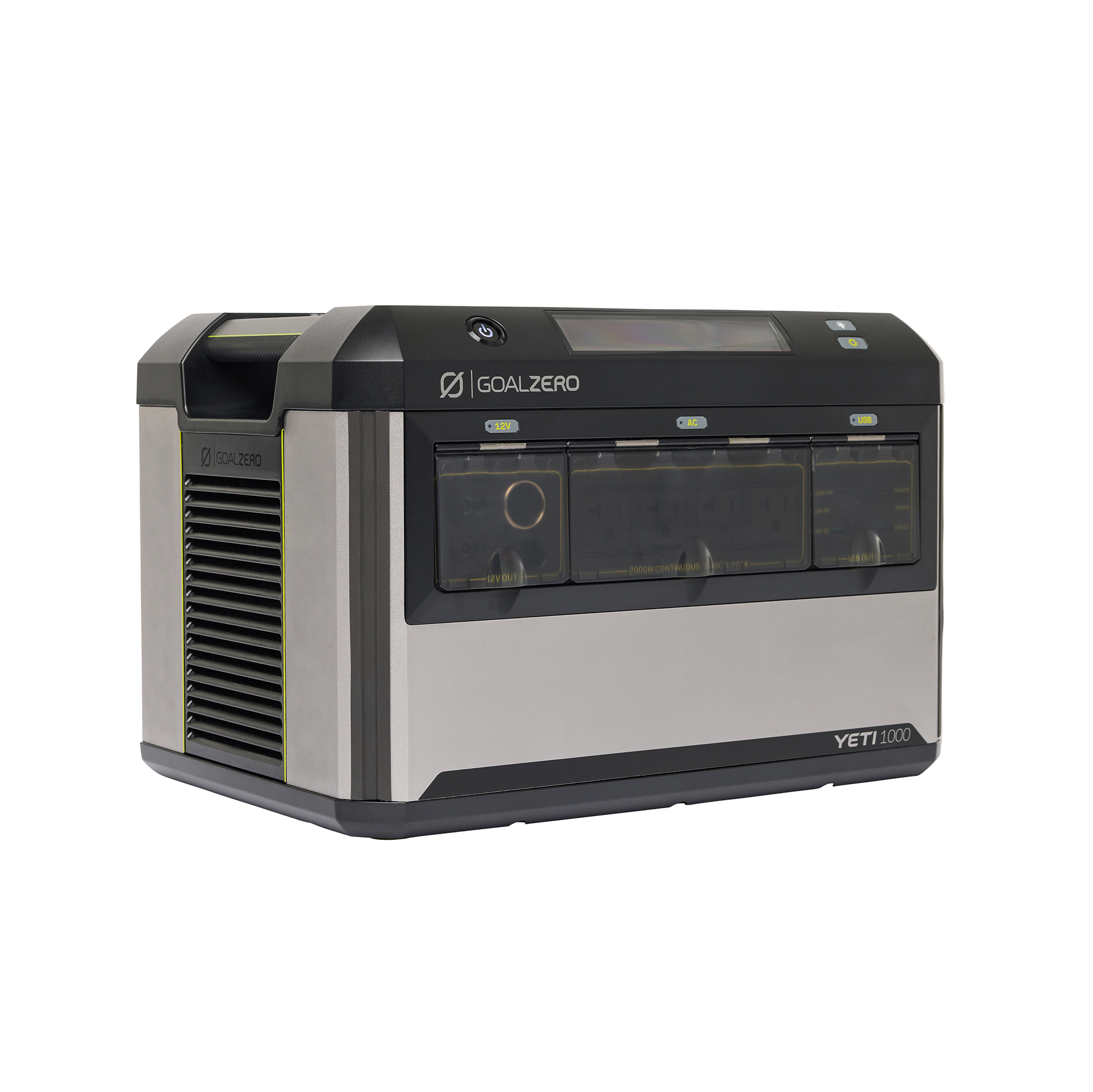
Goal Zero Yeti 1000S
View at Goal ZeroWhy we like it
- 1,056Wh — runs a small fridge for 2 days
- 1,200W continuous output
- Recharges from solar in 3-4 hours
- USB-C PD ports, AC, 12V DC
- Built-in LED light + USB-C PD
Keep in mind
- Expensive
- 23 lbs is heavy for backpacking
- 02best value
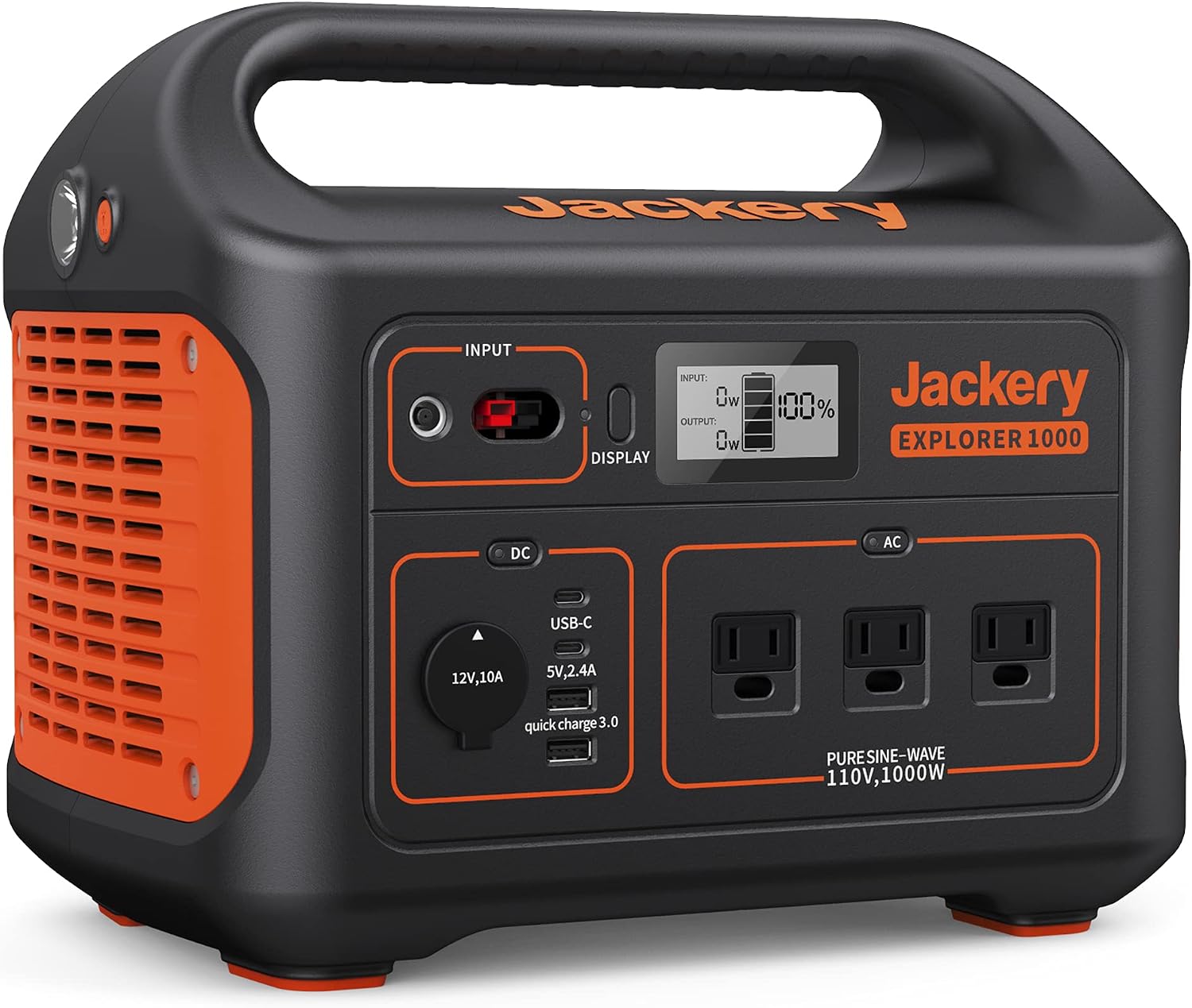
Jackery Explorer 1000
View on AmazonWhy we like it
- 1,002Wh for $899 — best price per watt
- 1,000W output
- Recharges from solar in 3.5 hours
- Lighter at 21.4 lbs
- Good app connectivity
Keep in mind
- Plastic casing feels less premium
- Fewer ports than Goal Zero
- 03best portable / backpacking
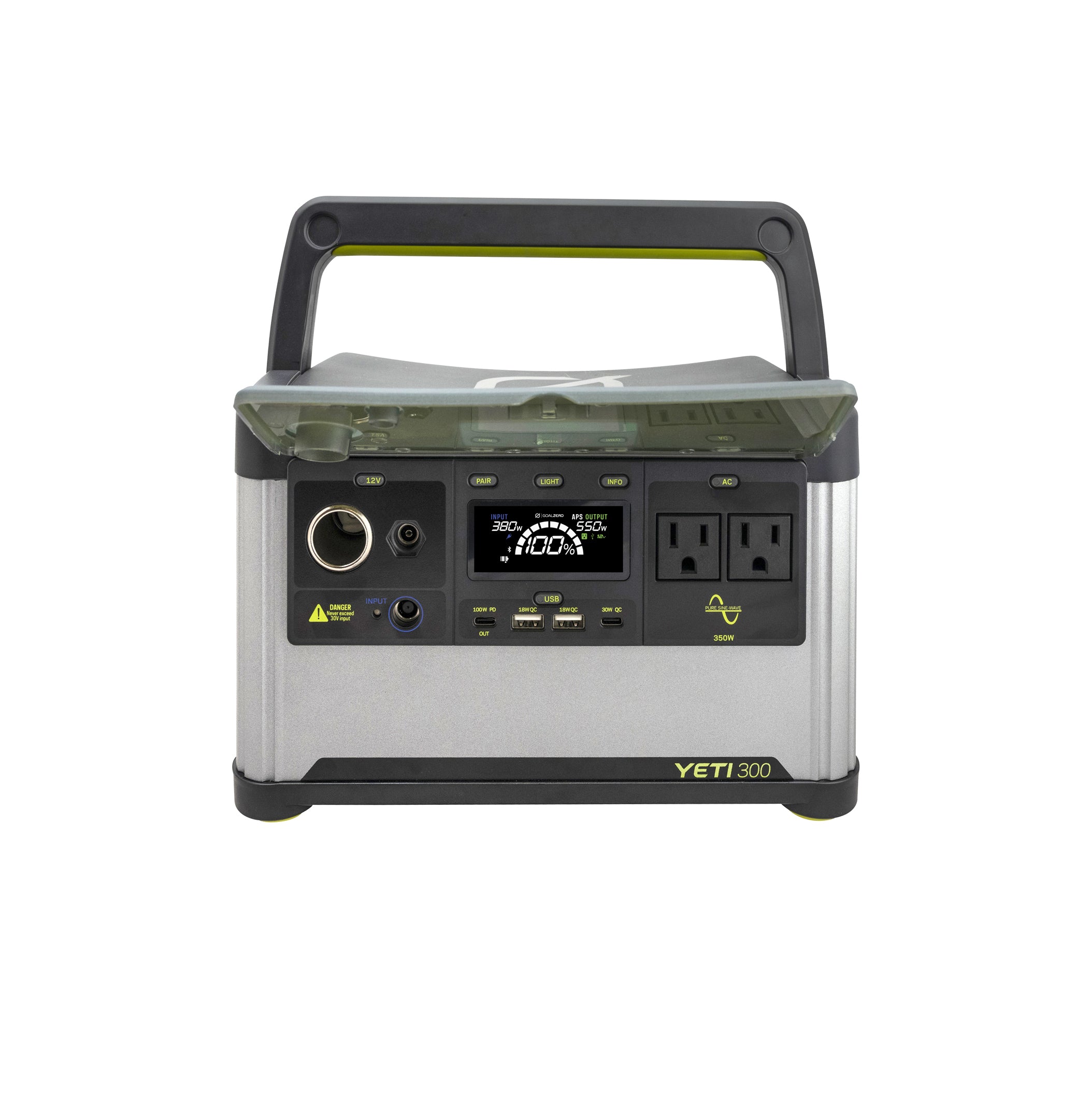
Goal Zero Yeti 300
View at Goal ZeroWhy we like it
- 11.2 lbs — carryable
- 288Wh runs a laptop for ~8 hours
- Solar rechargeable
- Compact
Keep in mind
- Too small for a fridge
- Not for multi-day extended use
- 04best for van life
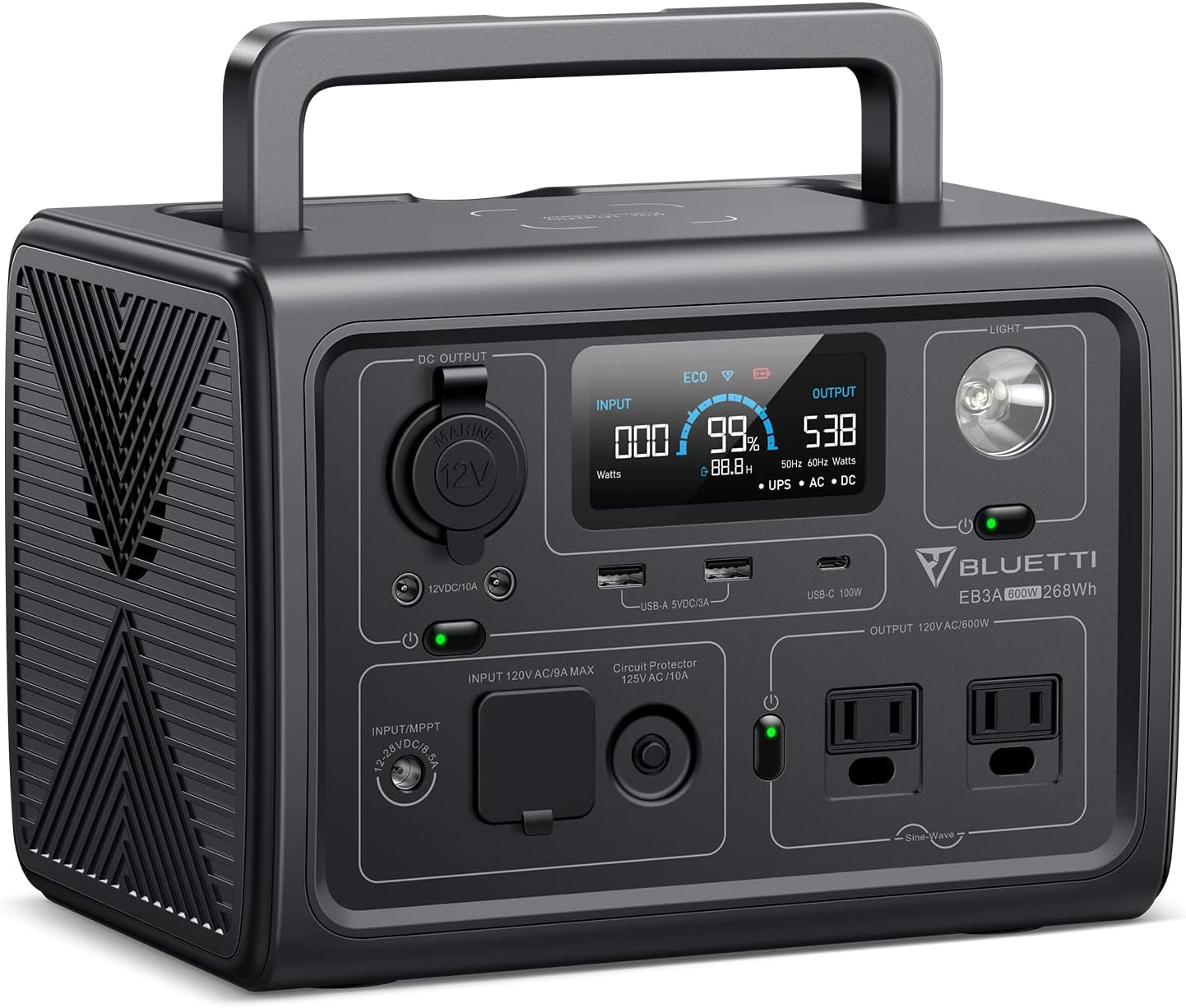
Bluetti EB3A
View on AmazonWhy we like it
- 1,024Wh
- 2,000W surge — can run a small AC
- Built-in MPPT solar controller
- Expandable with additional battery
Keep in mind
- 35 lbs is heavy
- No built-in fridge outlet
Recommended reading
Places where this gear actually earns its keep.