
Backcountry water is not a luxury. It is the difference between a three-liter carry and a two-liter carry, which is the difference between finishing a twenty-mile trail with your back intact or not. The filter you carry determines how much water you can safely drink from a creek, a tarn, or a spring. And the right filter for your trip depends on the source: a clear alpine tarn is not the same as a muddy creek after a storm.
I have used four different water filters on trail in the past year. The Sawyer Squeeze, the Sawyer Mini, the Grayl Geopress, and the LifeStraw Personal. I tested them against real sources: a glacial creek in Colorado (clear but cold), a muddy stream in the Smokies after rain (high turbidity), and a spring in the desert (clear but mineral-heavy). The critical spec is not the micron rating. It is the flow rate and how the filter handles dirty water without clogging.
The Sawyer Squeeze Filter is the default recommendation. Zero point one micron, which means it removes bacteria, protozoa, and filterable viruses. The flow rate is one and a half liters per minute, which means you can fill a one-liter bottle in about forty seconds. The lifetime is ten thousand five hundred gallons of clean water, which is about ten years of regular use. It weighs eleven ounces, which is light. The catch: it freezes in cold weather. If you are in the mountains in October and the water is thirty-five degrees, the filter clogs with ice and you need to keep it in your jacket or sleep with it. And squeezing is tiring if you are filling a large container. For a two-liter carry, you are squeezing for about a minute. It is not a problem, but it is something to be aware of.
The Sawyer Mini Filter is the compact option. Two point four ounces, zero point one micron, four thousand gallon lifetime. It fits in a pocket, which means it is the lightest water filter you can carry. The flow rate is slower: zero point four liters per minute, which means a one-liter bottle takes about four minutes to fill. It is not a problem for a single person, but if you are filling water for a group, the Sawyer Squeeze is faster. The catch: you need a separate container to drink from. The Mini is a filter, not a bottle. You attach it to a hose and squeeze water into a container. At forty dollars, it is the best value on this list, and the weight savings are real.
The Grayl Geopress is the dirty-water specialist. The pump design means you do not have to squeeze. You pump, and the water comes out clean. The filter removes chemicals, microplastics, and pathogens, which the Sawyer does not do. If your source is a creek that runs through a ranch or a farm, the Grayl is the right choice. The flow rate is slower than the Sawyer: about one liter per minute, which means a one-liter bottle takes about a minute. The lifetime is two hundred twenty gallons, which is shorter than the Sawyer. The catch: the pump is heavier, at ten and a half ounces, and the slower flow rate means you are waiting longer at every refill. But for a dirty source, the Grayl is the only option on this list that handles it.
The LifeStraw Personal is the budget and emergency pick. Thirty dollars, zero point two micron, no power needed, fits in a standard water bottle. The zero point two micron rating means it removes bacteria and protozoa but not viruses. For a backcountry trip in a developed area, that is fine. For a remote trip where the water source might have viral contamination, the Sawyer or the Grayl is the better choice. The lifetime is one thousand five hundred gallons, which is the shortest on this list. The catch: it is not for group use. It is a single-person filter, and the flow rate is slow. But at thirty dollars, it is the emergency kit item that should be in every daypack.
A few things I look for in a water filter: the micron rating should be zero point one or lower if you are in a remote area. The flow rate should be fast enough that you are not waiting more than a minute to fill a liter. And the filter should handle the kind of water you are actually drinking. A clear alpine tarn is not the same as a muddy creek. Match the filter to the source, not to the marketing.
Maintenance is the part most people skip. The Sawyer Squeeze and the Mini both need a backflush at the end of every trip: you invert the filter, attach a squeeze bottle to the output, and force clean water backward through the media. It takes thirty seconds, and it clears the silt and debris that slows the flow. If you skip it, the next time you use the filter, the first liter comes out slow, and the backwash after that is worse. I backflush mine every night if the water was muddy, and at the end of the trip regardless. The Grayl Geopress has a similar process, but the pump head comes apart for a quick rinse, which is easier than the Sawyer inversion.
Freezing is the silent killer. If a Sawyer filter gets below thirty-two degrees, the water inside the membrane expands and the housing cracks. I have lost one to a cold morning in Colorado in October. The fix is simple: keep the filter in your sleeping bag at night, or in your chest pocket if you are hiking. The Grayl pump is more cold-tolerant because the pump head seals the filter element, so it can sit outside your pack for a few hours without dying. But if you are in the mountains in November, the Sawyer needs body heat, and the Grayl is the safer bet.
The treatment hierarchy is worth understanding before you buy. A mechanical filter (the Sawyer, the LifeStraw) removes particles, bacteria, protozoa, and — at zero point one micron — filterable viruses. It does not remove chemical contaminants, heavy metals, or dissolved gases. A pump filter with activated carbon (the Grayl) adds a chemical stage that handles chlorine, some pesticides, and microplastics. A chemical treatment (iodine or chloramine tablets) handles viruses and chemicals but not particles, and it tastes like a swimming pool. A UV purifier (the SteriPen) handles everything except particles, which means you still need a pre-filter. For most backcountry trips, a Sawyer Squeeze and a Grayl in the emergency kit covers every source you are likely to encounter. Match the tool to the water, not to the label.
Common questions
Can I drink from any stream on a national park trail?
No. Some streams carry giardia, cryptosporidium, or bacteria from upstream livestock, hikers, or wildlife. A filter rated to zero point one micron removes all of those. The rule of thumb: if the water is clear and running, a filter is sufficient. If the water is muddy or standing, you want a pump filter with a pre-filter stage, or a chemical treatment on top of the filter. In desert parks like Big Bend, the sources are often alkaline and taste like chalk — the filter handles the biology, but the taste is just the water.
How long does a Sawyer Squeeze filter last?
The membrane is rated for about one hundred thousand liters of water, which is roughly two hundred and sixty thousand gallons. If you drink four liters a day, that is about seven thousand days, or nineteen years, of daily use. In practice, the housing and the squeeze bag wear out long before the membrane does. The practical life of a Sawyer Squeeze is five to eight seasons of regular use, at which point you replace the whole unit because it is cheap enough that replacing it makes more sense than trying to service it.
Do I need both a filter and a chemical treatment?
For most trips, a quality mechanical filter is sufficient. Add a chemical treatment (iodine or chloramine tablets) if you are in an area where viruses are a concern (some parts of Southeast Asia, or after a flood that has contaminated the source), or if you want a belt-and-suspenders approach for a multi-week trip. The filter handles particles and biology; the chemical treatment handles dissolved gases and the viruses that a zero point one micron filter does not reliably catch. For a weekend trip in the national parks, the filter alone is the right call.
What happens if my filter freezes?
The water inside the membrane expands and the housing cracks. With a Sawyer filter, that is usually the end of it — the crack is in the ceramic or the polymer membrane, and it is not repairable in the field. The Grayl pump is more cold-tolerant because the pump head seals the element, but it is not freeze-proof. The fix is prevention: keep the filter in your sleeping bag at night, or in your chest pocket while hiking. If you are in the mountains in November, that is not optional. A cracked filter is a dry filter, and a dry filter is a dead filter.
Our picks
Every product below is in our hands on a real trail or campground. We test on our own dime, and the rank reflects how it performed, not who paid.
- 01best overall
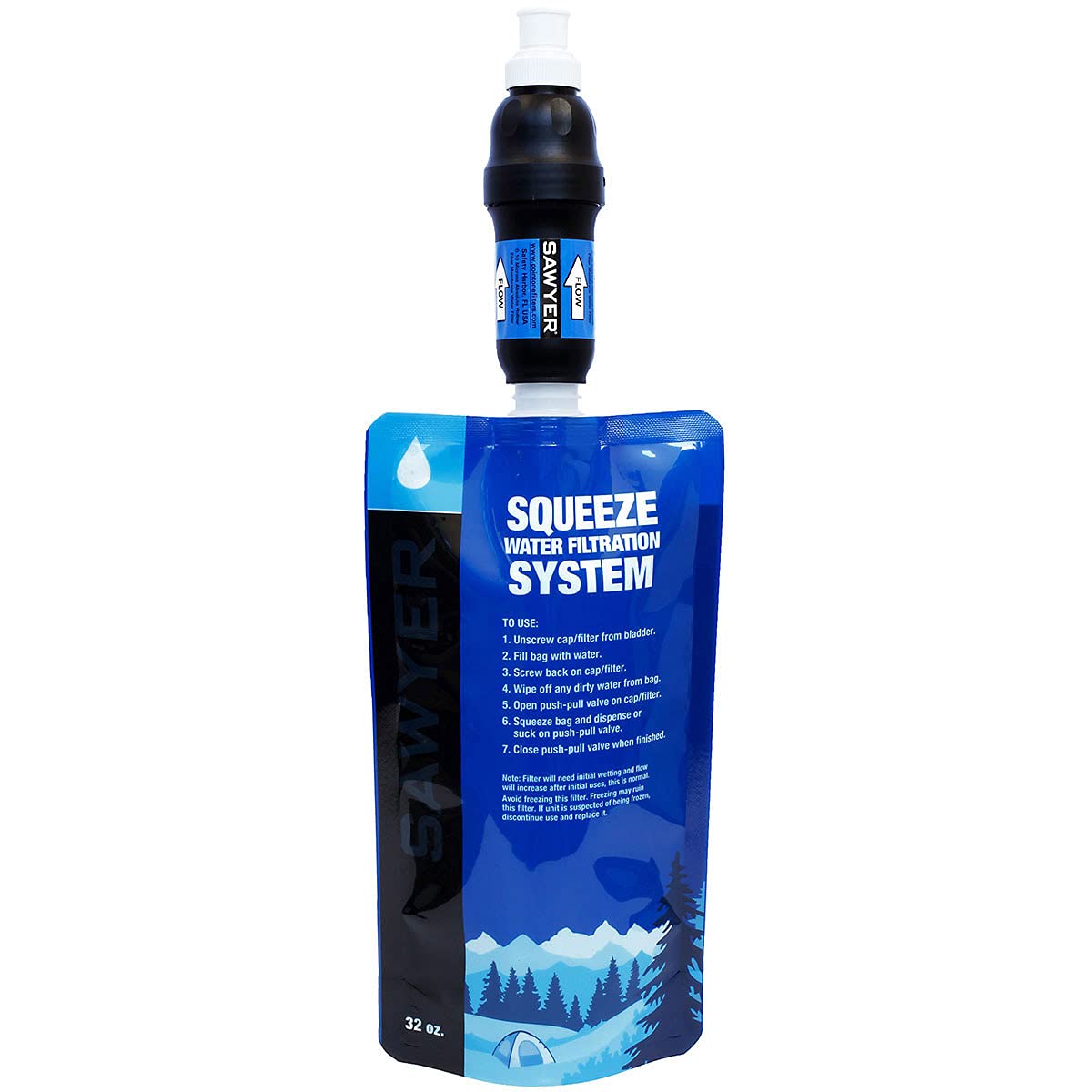
Sawyer Squeeze Filter
View on AmazonWhy we like it
- 0.1 micron — removes bacteria, protozoa, filterable viruses
- 1.5L per minute flow rate
- 10,500-gallon lifetime (clean water)
- Light at 11 oz
- Purifies in ~30 seconds
Keep in mind
- Freezes in cold — keep in jacket
- Squeezing is tiring for large volumes
- 02best compact
Sawyer Mini Filter
View on AmazonWhy we like it
- 2.4 oz
- 0.1 micron
- Fits in a pocket
- 4,000-gallon lifetime
Keep in mind
- Slower flow rate (0.4L/min)
- Needs a separate container to drink from
- 03best for dirty water
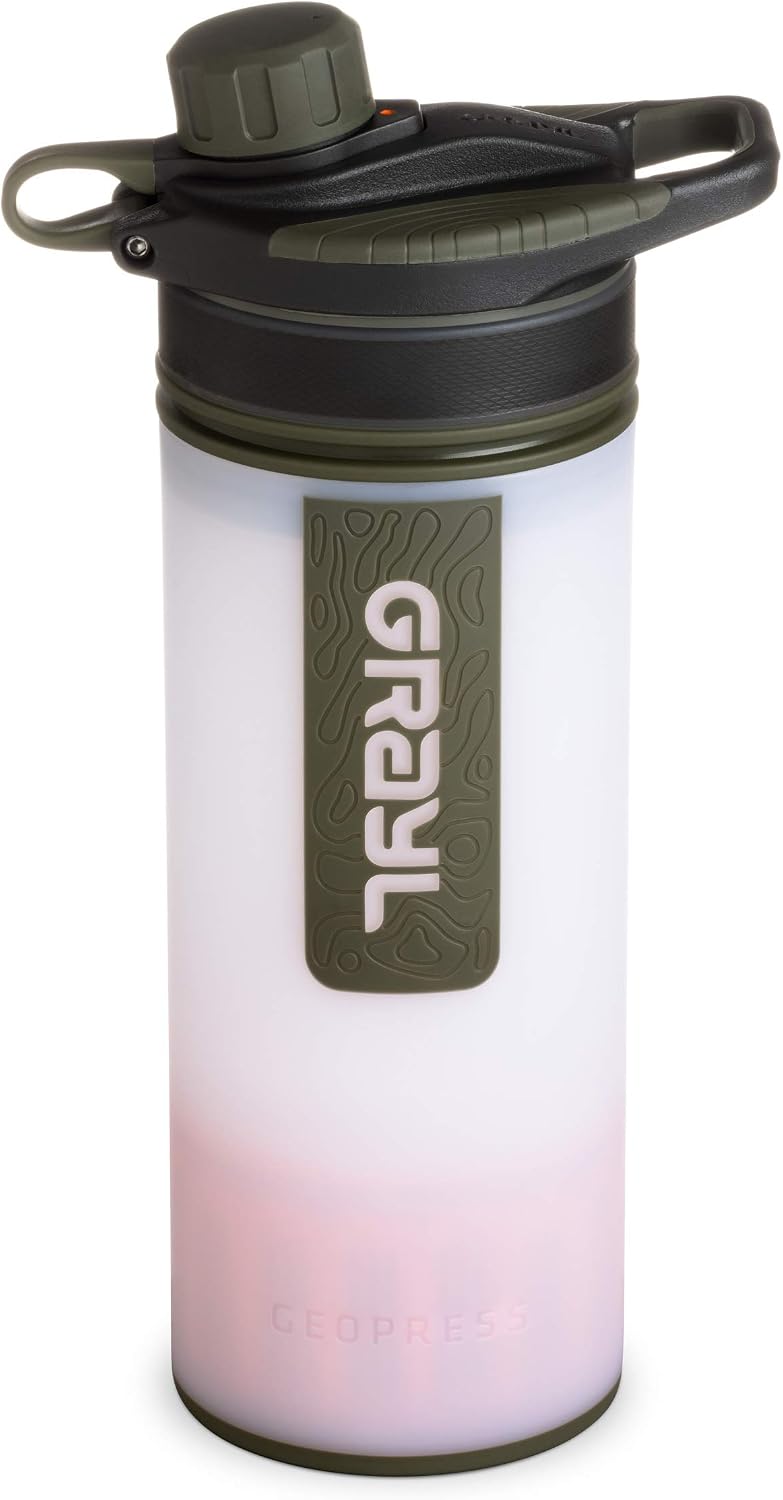
Grayl Geopress
View on AmazonWhy we like it
- Removes chemicals, microplastics, and pathogens
- Pump design — no squeezing
- Works in cold without freezing
- 220-gallon lifetime
Keep in mind
- Pump is slower than Sawyer Squeeze
- Heavier at 10.5 oz
- 04best budget / emergency
LifeStraw Personal Water Filter
View on AmazonWhy we like it
- $30
- 0.2 micron
- No power needed
- Fits in a bottle
Keep in mind
- Does not remove viruses
- 1,500-gallon lifetime (shortest here)
- Not for group use
Recommended reading
Places where this gear actually earns its keep.