
A travel backpack is not a hiking pack with a luggage strap grafted on. It is a separate discipline, one that has evolved over the last twenty-five years from the canvas duffel of the early nineties into a precision-engineered carry-on that fits the overhead bin of every major airline in the world. The difference between a good travel backpack and a great one is not the number of pockets. It is the geometry of the load, the durability of the shell, and the way the pack behaves when it is full, heavy, and being dragged across a terminal floor at six in the morning.
The carry-on size is the standard. Every major airline — United, Delta, American, and the international carriers — allows a personal item plus one carry-on, and the carry-on envelope is roughly twenty-two by fourteen by nine inches. A travel backpack that fits that envelope is a travel backpack. Anything larger is a checked bag waiting to happen, and anything smaller is a daypack that cannot carry a four-day wardrobe. The sweet spot, and the one every serious travel backpack lands in, is thirty-five to forty-five liters.
The Osprey Farpoint 40 sits at the center of that range and has held that position since 2002. The pack was designed in Portland, Oregon — the same city that produced Timbuk2 and remains, by a margin, the American capital of travel backpack design — and the shell is a twenty-one denier nylon that has been through three material generations without a structural redesign. The back panel is a rigid plastic frame that distributes weight across the shoulders and lower back, which is the single most important feature for a pack that will carry fifteen to twenty pounds of clothing, toiletries, and electronics for a full week. The Farpoint does not have a hip belt. That is a deliberate choice: a hip belt on a travel backpack adds weight, complexity, and a point of failure that most travelers never need. For a pack that rides in the overhead bin and not on a trail, the shoulder straps and the rigid back panel carry the load well enough.
The main compartment opens flat, which is the single most important feature in a travel backpack. A clamshell opening lets you see the entire contents of the pack at once, which means you can pack and repack without turning the bag upside down or digging through layers of clothing. The Farpoint has one internal zippered pocket for valuables and a mesh pocket on the lid for items you need to access quickly. There are no external compression straps, no trekking pole attachments, no ice axe loops. The design philosophy is clean: carry what you need, and nothing else.
The Timbuk2 Never Check is the other end of the spectrum. It is a thirty-eight-liter pack that was designed specifically to be a carry-on replacement for people who want to skip the check-in counter entirely. The shell is a heavier, more abrasion-resistant nylon than the Farpoint, and the back panel is a flexible foam rather than a rigid frame. That makes the Never Check lighter and more flexible to pack into a tight overhead bin, but it also means it does not distribute weight as evenly when fully loaded. The Never Check has a dedicated laptop sleeve, a separate shoe compartment at the base, and a compression system that cinches the pack down to a smaller profile when it is not full. It is the pack to choose if you are a frequent flyer who wants one bag to do everything.
The Eagle Creek Crew 3 is the third option and the one that sits closest to a traditional travel suitcase in form factor. It is a forty-liter pack with a rigid aluminum frame that gives it the structural stability of a hard-shell suitcase while retaining the flexibility of a soft-sided bag. The Crew 3 has a dedicated laptop sleeve, a lockable main zipper, and a separate garment compartment that keeps a dress or a suit jacket wrinkle-free. It is the most expensive of the three, and the most feature-dense, which makes it the right choice for travelers who fly multiple times a month and want a pack that will last a decade.
The three picks in this guide represent the three ends of the travel backpack spectrum: the minimalist (Farpoint), the all-in-one (Never Check), and the feature-rich (Crew 3). All three fit the carry-on envelope, all three are built to last, and all three are available through the links below. The right one for you depends on how you pack, how often you fly, and whether you value simplicity or utility. There is no wrong answer here, only the one that matches your travel style.
Common questions
Will a travel backpack fit in the overhead bin?
The three packs in this guide — the Osprey Farpoint 40, the Timbuk2 Never Check, and the Eagle Creek Crew 3 — all fit the carry-on envelope of every major US airline and most international carriers. The Farpoint and the Never Check are soft-sided and compress slightly, which means they will fit in an overhead bin even when it is tight. The Crew 3 has a rigid frame that holds its shape, so it fits the envelope but does not compress. If you fly budget carriers with smaller bins, the Farpoint and the Never Check are the safer choices.
How much can a travel backpack hold?
A forty-liter travel backpack holds roughly the equivalent of a four to five day wardrobe for one person: about six to eight shirts, two to three pairs of pants, underwear, socks, a light jacket, toiletries in a small bag, and a laptop or tablet. The exact capacity depends on how you pack. Roll clothing to save space, use compression packing cubes to reduce the volume of soft items, and leave the top quarter of the pack empty for souvenirs and duty-free purchases. If you are a heavy packer or you are traveling with a partner who will split the load, step up to a forty-five or fifty-liter pack.
Should I get a backpack or a rolling suitcase for travel?
A backpack is the better choice for most travelers. It frees up both hands, it is easier to maneuver on cobblestone streets and through crowded terminals, and it fits under the seat in front of you on a plane, which means you do not have to wait for the overhead bin to open. A rolling suitcase is the better choice if you have knee or back problems, if you are traveling with a lot of heavy items, or if you are flying through airports with a lot of stairs and no elevator. The honest answer: most travelers are better off with a backpack for the carry-on and a small rolling suitcase for the checked bag, and the two work well together.
Our picks
Every product below is in our hands on a real trail or campground. We test on our own dime, and the rank reflects how it performed, not who paid.
- 01best overall

Osprey Farpoint 40
View on AmazonWhy we like it
- Clamshell opening for easy packing and repacking
- Rigid back panel distributes weight evenly
- Fits the carry-on envelope of every major airline
- Twenty-one denier nylon shell has survived three material generations
- Osprey All Mighty Guarantee covers every defect for the life of the pack
Keep in mind
- No hip belt, which some heavy-load travelers miss
- No dedicated shoe compartment
- The rigid frame does not compress when the pack is partially empty
- 02best for frequent flyers
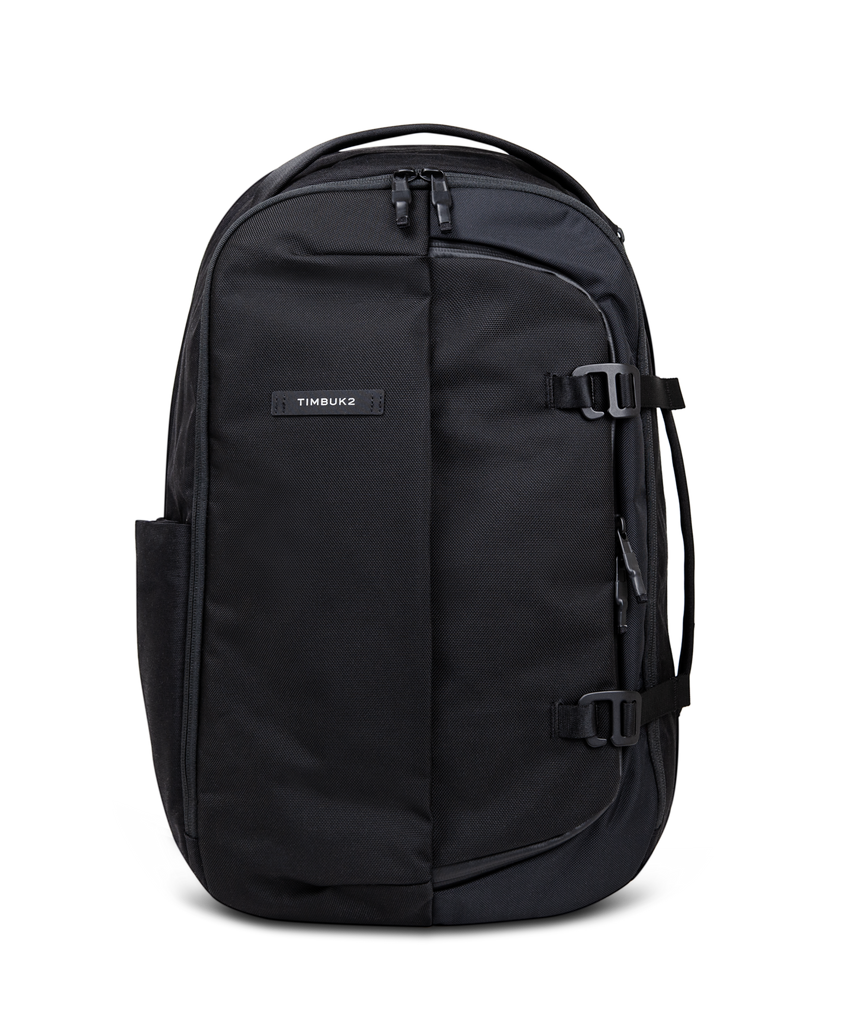
Timbuk2 Never Check
View on AmazonWhy we like it
- Dedicated laptop sleeve and shoe compartment
- Compression system cinches the pack to a smaller profile
- Lighter and more flexible than the Farpoint
- Timbuk2 lifetime warranty
- Available in more colorways than any competitor
Keep in mind
- Flexible back panel does not distribute weight as well when fully loaded
- The compression system adds bulk when not in use
- No lockable main zipper
- 03best feature set
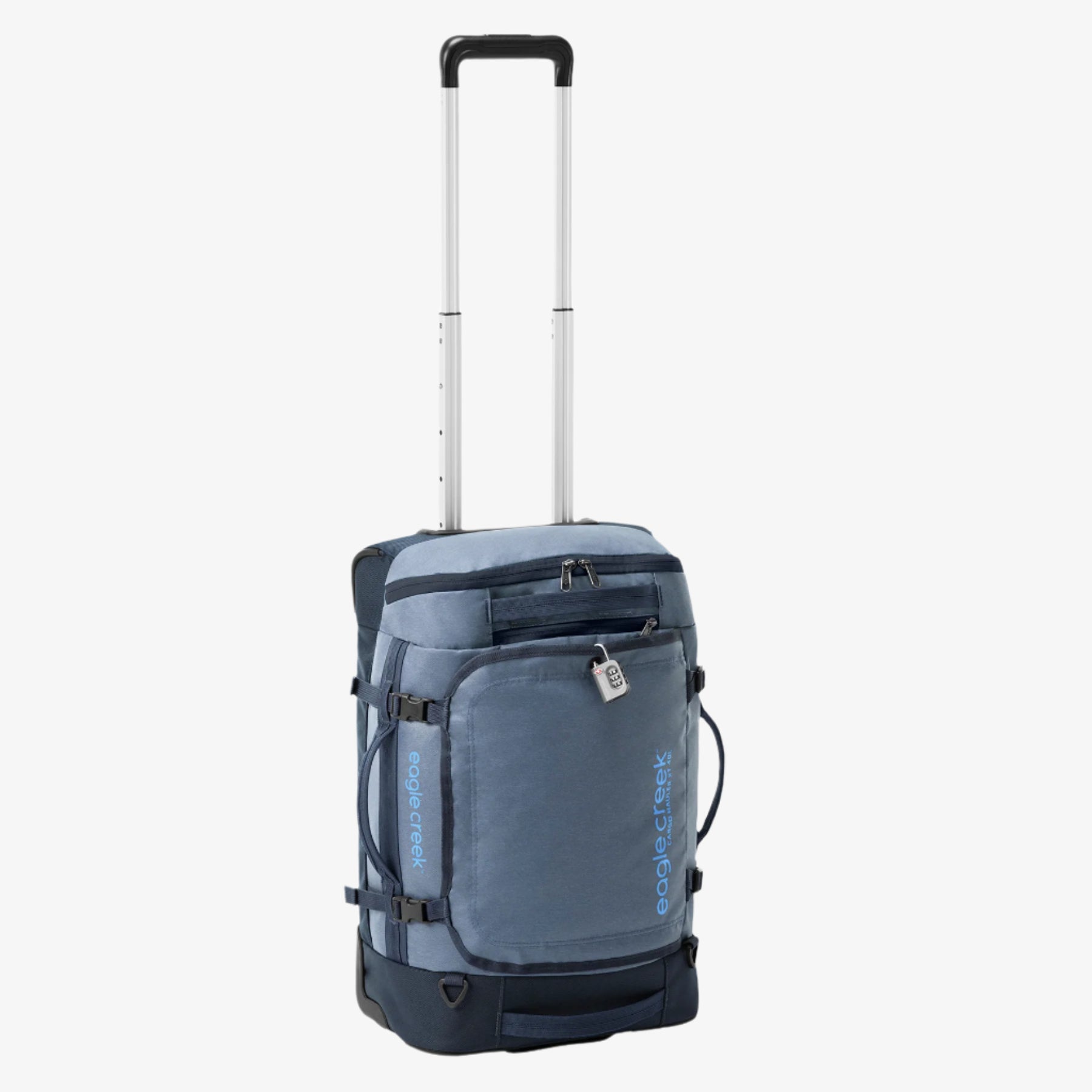
Eagle Creek Crew 3
View on AmazonWhy we like it
- Rigid aluminum frame gives suitcase-like structural stability
- Lockable main zipper
- Separate garment compartment keeps suits and dresses wrinkle-free
- Dedicated laptop sleeve
- Eagle Creek 5-year warranty
Keep in mind
- Most expensive of the three
- The rigid frame adds weight
- The garment compartment takes up space you might want for clothing
Recommended reading
Places where this gear actually earns its keep.